
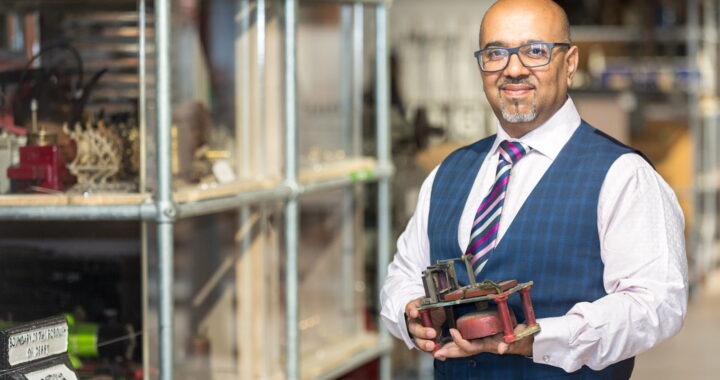
Mo Suleman takes a look at why many museums and galleries aren’t taking advantage of the Museums and Galleries Exhibition Tax Relief, and urges more charities to claim what’s theirs.
When the Museums and Galleries Exhibition Tax Relief (MGETR) was introduced in 2017, it was hailed as a long-overdue recognition of the cultural and economic importance of the UK’s museums and galleries. The scheme was designed to encourage investment in public exhibitions by allowing institutions to claim back a portion of their eligible production costs, freeing up vital funds to reinvest in public engagement, staffing, and collections care.
Yet, eight years on, the data paints a mixed picture. While MGETR has unlocked more than £250 million in reliefs since launch, the latest HMRC statistics suggest that many museums are still not claiming their full entitlement – and in some cases, not claiming at all.
A relief designed for the whole sector – but not fully used
According to HMRC’s Creative Industries Statistics (August 2025), just 270 claims were made by museums in 2023–24. By comparison, film, theatre and high-end television each recorded thousands of claims in the same period.
This is not because museums are running fewer projects. Far from it. Across the UK, museums are curating new exhibitions, revitalising permanent galleries and touring collections more actively than ever. The issue lies in awareness, understanding, and confidence in what can actually be claimed.
What the data shows
The government’s figures reveal several striking contrasts between museums and other creative sectors:
- Low claim numbers – MGETR remains the least utilised of all the creative industry tax reliefs. Theatre Tax Relief (TTR), for example, saw over 2,300 claims last year, while film and high-end TV together accounted for well over 2,000 claims. Museums, by comparison, accounted for a mere 270.
- High value concentration – the HMRC data also shows that just 13% of museum claims account for more than half (54%) of all the value paid out under MGETR. In other words, a small number of large institutions are maximising the scheme, while many smaller or regional museums are barely scratching the surface.
- Regional imbalance – the vast majority of MGETR claims still come from museums in England. Claims from Scotland, Wales and Northern Ireland remain comparatively low. This contrasts with other reliefs, such as Theatre Tax Relief (TTR), where regional uptake is far more evenly distributed.
- Narrow scope of costs – many museums claim for only direct exhibition build costs, such as fabrication or installation, overlooking other qualifying expenses like design, project management, loan arrangements and conservation. These are all eligible under HMRC guidance but often missed.
- Slower growth – while film and theatre reliefs have shown strong year-on-year growth since their introduction, MGETR’s growth rate has been modest. This suggests a sector that has yet to fully embed the relief into its financial planning processes.
Why are museums underclaiming?
The reasons are varied but several recurring themes emerge from conversations with finance teams, directors and trustees across the museum sector:
- Misconception about eligibility
A common misunderstanding is that museums cannot claim if an exhibition is profitable or partly funded by grants. In fact, MGETR is designed precisely for this mix of funding. The test is not whether an exhibition generates profit but whether it is intended for public display and meets certain creative criteria. Many eligible projects are therefore being left out simply because finance teams believe they don’t qualify.
- Underestimating qualifying expenditure
Even museums that do claim often apply too narrow a definition of what counts as ‘core expenditure’. HMRC guidance allows claims on a broad range of costs, including:
- Design and interpretation
- Storyline development
- Staff costs directly involved in production
- Transport and insurance of objects
- Loan administration
- Technical support and AV integration
These costs often make up a significant portion of total spend, but are frequently missed.
- Lack of internal resources or expertise
Smaller museums, especially local authority or volunteer-run institutions, may not have the in-house expertise to prepare claims. The process can seem complex, and finance teams are understandably cautious about misinterpretation. As a result, some don’t claim at all, or claim conservatively.
- Unclear guidance and evolving practice
Unlike film or theatre tax reliefs, where professional advisors and trade bodies have built up years of expertise, MGETR remains relatively young. Best practice is still evolving, and many museums simply don’t know what’s possible.
- Missed opportunities in past submissions
Even museums that have claimed before may have left money unclaimed. As understanding of the scheme has matured, I’ve helped institutions revisit earlier submissions and identify legitimate additional expenditure, sometimes increasing relief by 20–40%.
Why this matters
MGETR is more than just an accounting exercise – it’s a vital source of funding that can directly support creativity, staffing, and public access.
At a time when local authority budgets are tightening, visitor income is unpredictable and grant funding is increasingly competitive, MGETR offers a guaranteed, government-backed way to recover costs.
Every under-claimed or unclaimed exhibition is money that could have gone back into supporting your teams, your collections, and your communities.
Success stories
We’ve seen first-hand how transformative MGETR can be when claimed correctly:
- A small regional museum increased its claim by more than 35% after re-examining its expenditure categories.
- A national institution recovered a significantly large six figure sum in additional relief by including staff time, design and transportation costs.
- Several local authority-run museums became eligible by creating a simple trading subsidiary to process their claims – a model now used successfully across the sector.
These examples show what’s possible when MGETR is understood as a strategic opportunity, not just a tax form.
The opportunity ahead
The next phase of MGETR offers an important chance for the sector to catch up. As government continues to support the creative industries through tax incentives, museums need to ensure they are fully participating in the funding landscape.
If we want to see a thriving, resilient museum sector – one that can keep telling stories, sharing collections, and inspiring visitors – we must make full use of every tool available. MGETR is one of those tools.
It’s time to stop under-claiming and start reclaiming what’s rightfully ours.
How can Mo help?
I can help in many ways, whether you have never claimed before, or whether you are council run and therefore currently ineligible or whether you have claimed but unsure if you could have claimed more. Contact Mo to find out